Traditional AI detection tools focus on how an essay looks, not how it was made. A student can make AI-generated work appear human-written without ever going through a real writing process. The real solution isn't retroactive detection — it's verifying the process itself.
Join the Waitlist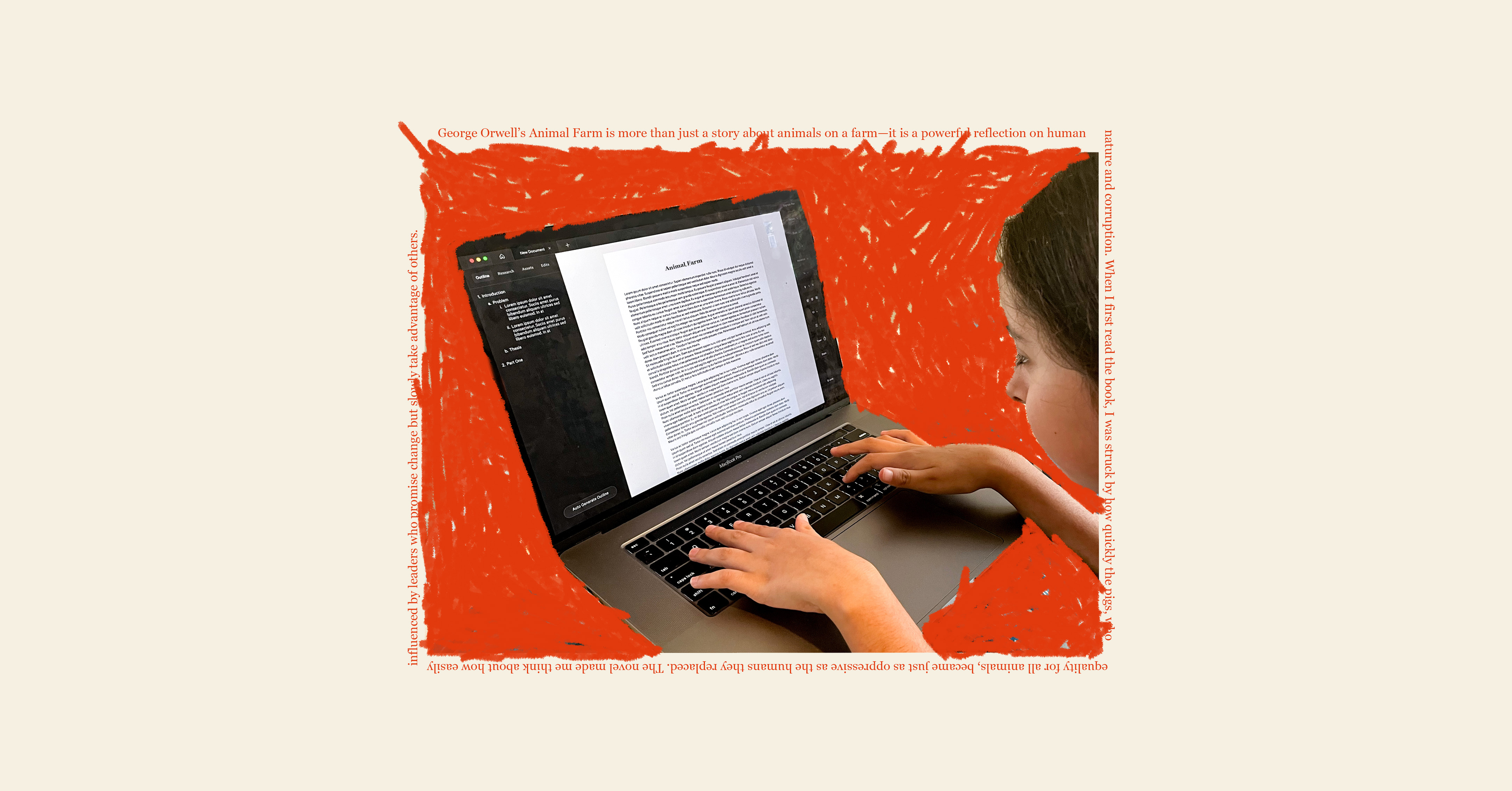
Teachers are more suspicious than ever about their students offloading their essays to AI. And for good reason. All good teachers have developed a smell test to detect if AI was used: the infamous em dash, arguments made in threes, and also if there is a stylistic mismatch between how a student talks in class and how they write.
When ChatGPT went mainstream in late 2022, schools needed a fast response to prevent students offloading their writing assignments to LLMs. The content based detection tools worked with the same logic as plagiarism detection which is to scan the finished product, look for patterns that seem inauthentic, and flag what’s suspicious. Content-based AI detection scans for perplexity and the unpredictability of a sequence of language in text as well as uniformity in sentence length and structure. (Galczynski, 2025)
But that window has closed.
Today’s AI models write better. The tells for the content-based AI detection tools are harder to pick up on. In addition, students can prompt their LLM to write a less detectable essay.
Students can now prompt AI to write their essays in the voice of a student which make the essays undetectable. There are also tools for students to input essays and make their essays more human sounding.
The constant innovation of LLMs make traditional content-based detection tools ineffective, since they are always a few steps behind.
The fundamental problem with traditional ai detection tools is that it is answering the wrong question.
Content detections asks: Does this essay look like it was written by AI?
The question teachers actually need answered is: Did this student write this essay?
These are two fundamentally different questions. A student can make a finished product look like they wrote it without going through an actual writing process. Solving for the latter question goes to the core of the problem and is preventative in nature rather than retroactive.
That is where WriteUp comes into play.
WriteUp is a closed-loop word processor that allows students to write and submit essays directly on our platform. By keeping the student’s work inside a controlled environment, WriteUp can measure how the essay was written.
Keystroke-level detection does not ask whether the essay sounds human, but asks whether a student sat down and wrote it.
WriteUp provides multiple layers of detection and prevention for students using LLMs to write essays. The first layer is not allowing for copy-pasting from outside the document. This prevents large pieces of pre-written text to end up in the word processor. This is a very effective first line of defense in preventing AI writing.
We then provide session tracking that tracks the keystrokes for the full writing journey, not just the end result. Teachers can see how their students were writing throughout their essay. Through keystroke-level detection, we can measure a number of writing patterns that track how authentically the student is writing such as burstiness, linearity in writing, typing to deletion ration, etc.
When a student submits an essay, teachers receive an authenticity report covering more than 30 behavioral metrics. We are measuring how the essay was written, providing detailed evidence that either supports or questions the student’s authorship.
Lastly, since academic integrity isn’t just about copying AI, we also make it much easier for students to cite their sources by making the works cited or bibliography page automatically generated. Students can add in references such as journal articles, websites, or books, and easily reference them throughout the document.
Schools need a tool that moves with the problem, not one students and AI models have already outrun. WriteUp isn’t a better detector, but a fundamentally different solution to protecting the integrity of writing for students.
If you are curious about what this looks like in your classroom or across your school, we would be glad to walk you through WriteUp.